


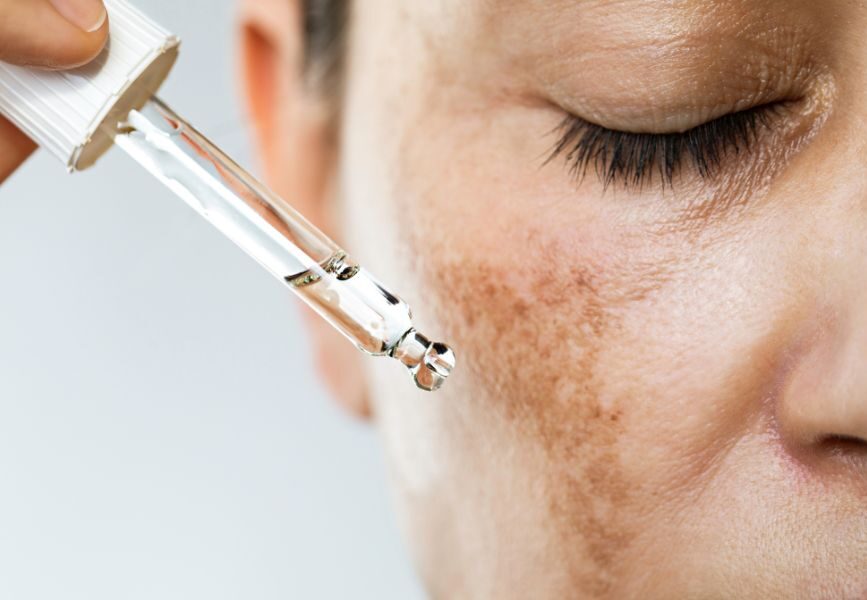
Dark patches on the cheeks, forehead or upper lip can appear even when you’ve been careful with your skincare, which can feel confusing and frustrating in equal measure. During perimenopause and menopause, fluctuating oestrogen levels make melanin-producing cells more reactive, meaning pigmentation can develop or deepen regardless of how consistent your routine has been.
Combined with UV exposure, this reactivity can make pigmentation darker and considerably harder to treat, which is why many women first notice it becoming more visible in their 40s and 50s. Understanding why this happens is the first step toward finding an effective treatment approach, and it’s exactly where D’vine Skin & Body’s experience with hormonal skin changes makes a real difference.
The Hormonal Link Behind Pigmentation
Melanin-producing cells, known as melanocytes, are sensitive to hormonal fluctuations. As oestrogen levels shift unpredictably during perimenopause, these cells can become more active and produce melanin unevenly across the skin. This is what creates the blotchy, patchy pigmentation many women notice for the first time in midlife, even in areas that were never particularly sun-sensitive before.
UV exposure compounds this effect significantly. Sun exposure that skin may have tolerated well in earlier decades can now trigger a stronger pigmentation response, and existing dark patches can deepen further with continued exposure. This combination of hormonal reactivity and UV sensitivity is why pigmentation during this life stage tends to be more stubborn and more visible than pigmentation experienced earlier in life.
Prevention vs Correction
One of the most important things to understand about hormonal pigmentation is that prevention is far more effective than correction after the fact. Once pigmentation has set in, it typically takes more time, more targeted treatment and more patience to fade than it would have taken to prevent in the first place. This doesn’t mean correction isn’t possible, but it does mean daily SPF and proactive skincare deserve serious attention well before pigmentation becomes visible, not just after.
For women already noticing dark patches, this isn’t cause for concern about wasted opportunity. It simply means the approach needs to combine prevention going forward with active correction in the present, which is exactly how D’vine Skin & Body structures its pigmentation treatment plans.
A Personalised Approach to Uneven Skin Tone
At D’vine Skin & Body, pigmentation is never treated as a one-size-fits-all concern. Every treatment plan begins with a thorough assessment of the underlying causes, since pigmentation driven by hormones, sun exposure or a combination of both can respond differently to treatment. This diagnostic first step is part of what has made D’vine a trusted choice for women dealing with stubborn or recurring pigmentation.
Once the underlying picture is clear, BBL Skin Rejuvenation is often recommended. This treatment targets visible pigmentation directly while also improving overall skin tone and stimulating collagen production, offering benefits that extend well beyond simply fading dark patches. Results typically build over a series of sessions, with skin tone becoming progressively more even as treatment continues.
Why SPF and Homecare Are Non-Negotiable
No pigmentation treatment can deliver lasting results without consistent daily SPF, since UV exposure will continue to trigger melanin production regardless of how effective the treatment itself has been. This is a point D’vine Skin & Body emphasises with every client, because skipping sun protection can undo weeks of treatment progress in a single afternoon outdoors.
Alongside SPF, targeted homecare plays a supporting role in maintaining and building on treatment results between sessions.
Product Spotlight: Lamelle Luminesce Range
The Lamelle Luminesce Brighter Day formula, part of the Pigment Correction Collection, supports a brighter, more even complexion as part of a daily routine. Paired with Luminesce Evening Glow for overnight renewal and Luminesce Radiant Eye Cream for the delicate eye area, this range works around the clock to support tone evenness and complement in-studio pigmentation treatment.
Ready to Address Uneven Skin Tone?
Hormonal pigmentation is far easier to prevent than it is to correct. If you’ve noticed dark patches becoming more visible over the past year or two, a personalised consultation can help identify the cause and map out the right treatment path. Get in touch with D’vine Skin & Body to book a consultation.